Recovering from heart surgery with a toddler
Ashley always knew her aortic valve would need replacing one day. What she didn't plan on was recovering from heart surgery with a very active two-year-old.
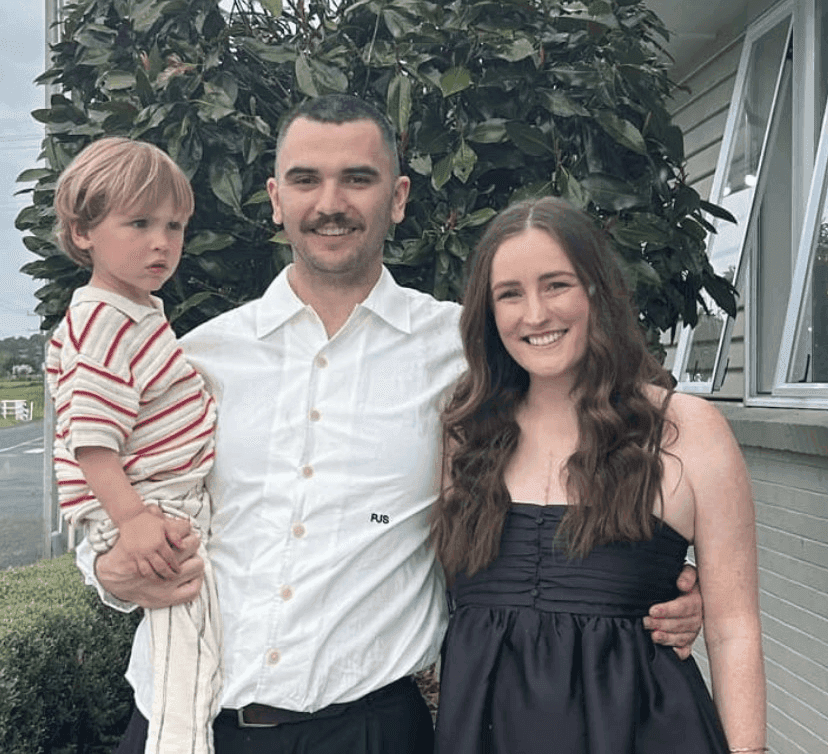
“I feel incredibly lucky to have had this opportunity, but I am also mindful of the whānau of the person who gave it to me, and so thankful to them for it.” — Ashley, heart valve recipient
When I was a toddler I was diagnosed with a heart murmur which was soon revealed to be a severe leak of my aortic valve. I had surgery in 2006 to repair the valve but always knew a valve replacement would eventually be necessary. I’d abruptly begun having symptoms of fatigue, dizziness, and shortness of breath, which was unusual after eighteen years of essentially no symptoms at all.
Sometimes, when describing my experience, I will subconsciously minimise my symptoms out of concern that I’ll appear to be exaggerating; it was so sudden and surreal that sometimes it feels like a dream in hindsight. After a relatively rocky pregnancy, and having to plan so much of that with my cardiologist, it was such a relief to have things moving again toward greater independence.
The surgery was difficult to plan. Being a teacher, I was adamant that my extended period of leave wouldn’t impact the students too much, but most of all I had to consider my partner and two-year-old son. Knowing he would have a very different version of his mother for a while gave me a lot of anxiety, wondering how they would react to me being so slow and weak.
After the surgery, I was very lucky to have family support to help out at home with my very active toddler, and the mundane tasks of day-to-day life. Doing a load of washing, brushing my hair, changing my son’s nappy; all tasks that became near-impossible with minimal strength and a constant ache in my chest. I was extremely dizzy and lightheaded for six weeks post-surgery which slowly eased along with the pain.
I am now almost six months post-surgery and I feel as though I am almost out the other side of the recovery phase. I am still on medications, still have some dizziness, but I’ve started to exercise again and am slowly regaining my strength. I’ve always been active, and I like to stay fit as much as possible, so getting back into working out feels like a breath of fresh air for my mental and physical health.
I must admit, it was hard to know how much was too much, and still question if I am pushing the exercise too soon. There’s a lot of trial and error.
I’m in two minds about my donor valve. On the one hand I feel incredibly lucky to have had this opportunity, but I am also mindful of the whānau of the person who gave it to me, and so thankful to them for it. I would love to know more about them, their occupation, their hobbies, if we had anything in common. I’m in two minds about my donor valve.
In talking with colleagues, students and friends, it always blows my mind to know how many people are affected by heart disease, or some form of transplant, or even just know someone who will eventually need a donor of some form. I also can’t help but feel a little unusual that my valve that caused me years and years of appointments and testing is all of a sudden gone, replaced with someone else’s! But mostly, I’m just grateful.
Learn more about cardiovascular tissue donation
Here are common questions people ask about cardiovascular donation.