Organ and tissue donation
There are very few circumstances in which a patient cannot donate any organ or tissue. What can be donated depends on their age, their past medical and social history, the cause and circumstances of death, and the condition of the organs and tissues themselves.
Call (09) 630 0935 early, and before donation is raised with whānau, to discuss this.
Which type of donation is possible?
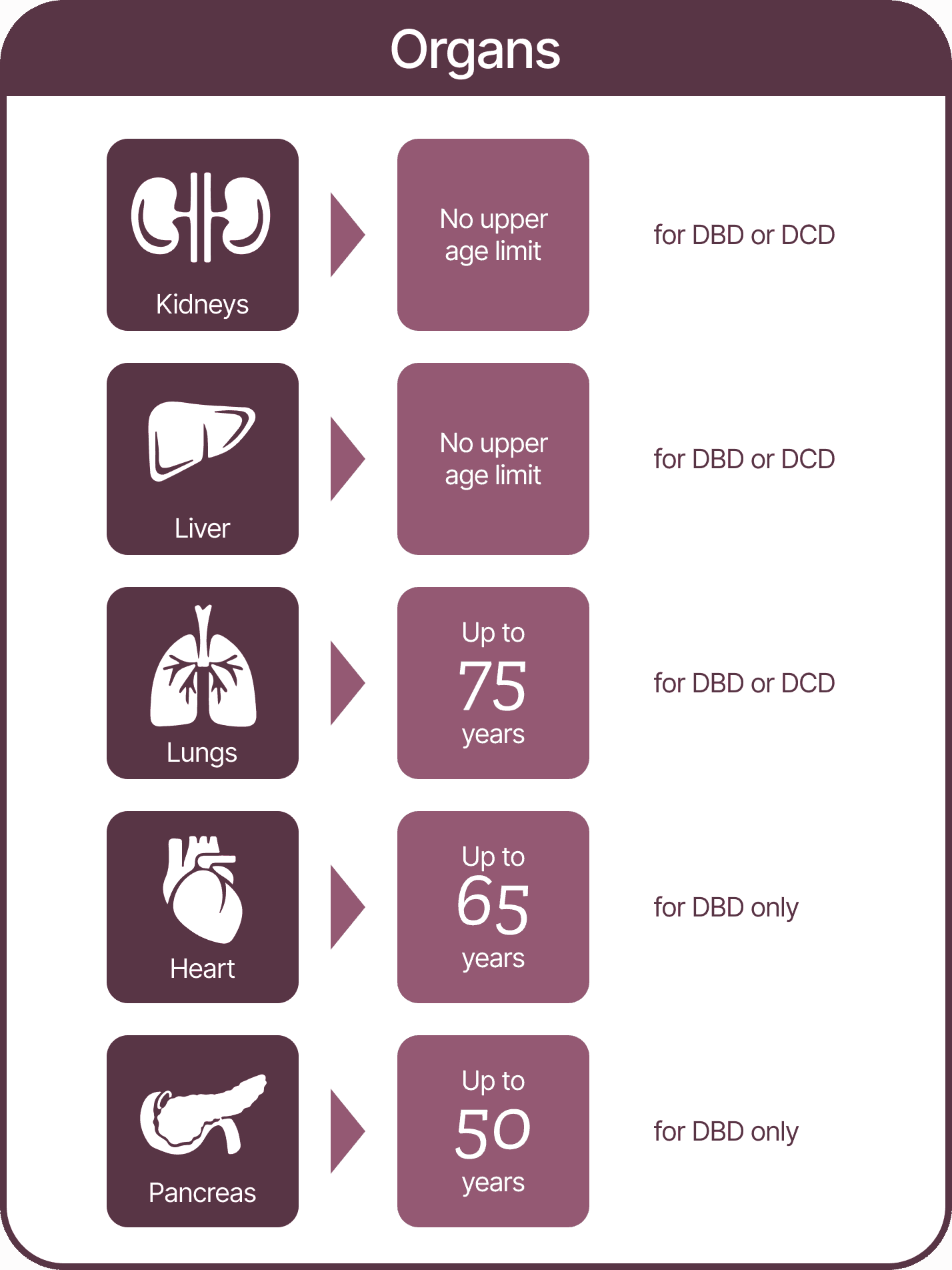
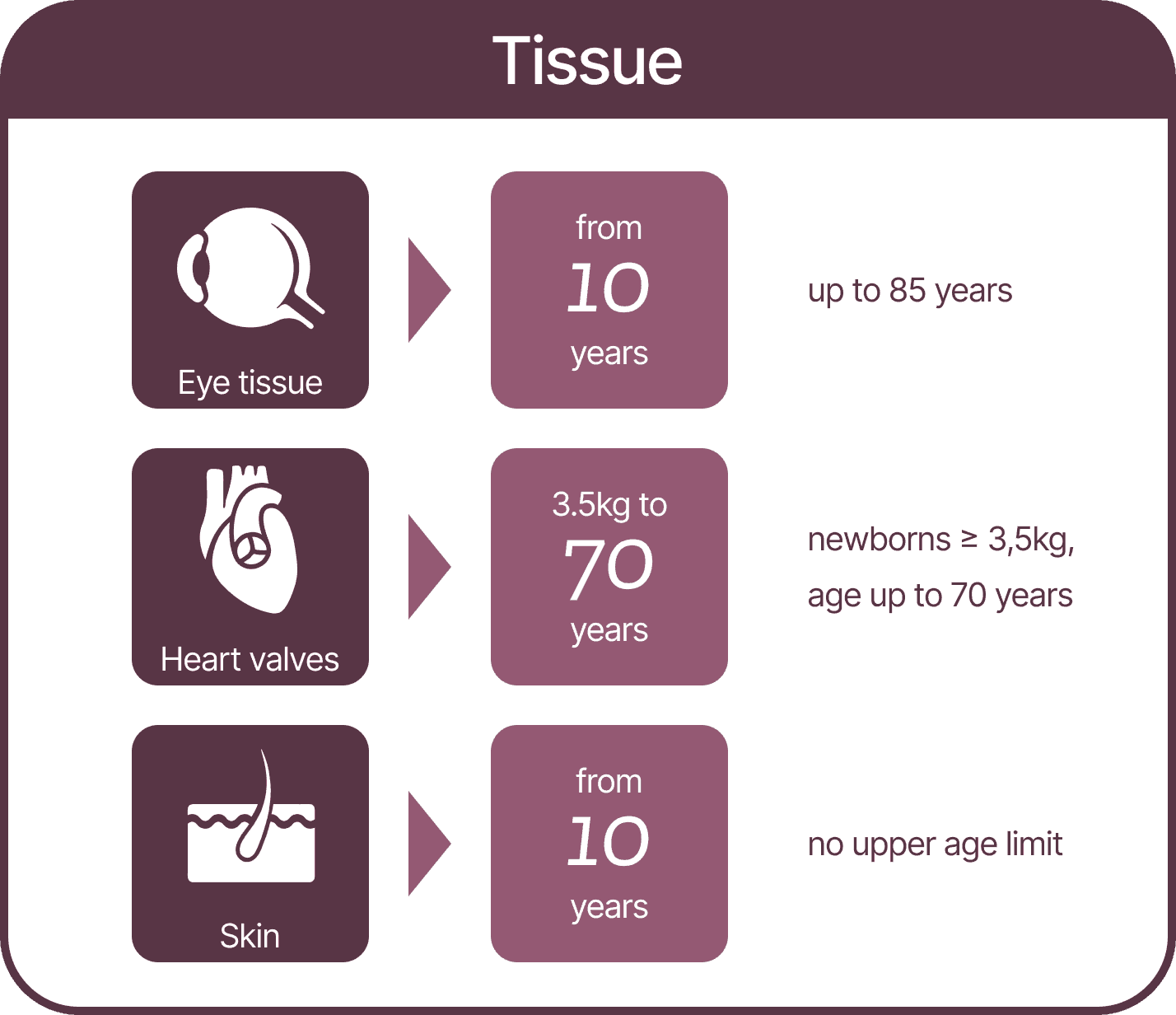
Is my patient the right age to donate?
Age is rarely the barrier people expect, and it differs by organ and by tissue.
What rules a patient out?
Very little. ODNZ recommends early consultation with the donor coordinator wherever a contraindication appears to exist — a history of malignancy, for example. This prevents donation being discussed with a whānau when it is not possible, and it avoids ruling out patients who could have donated.
The coordinator will discuss the patient with the transplant services and tissue banks, and advise whether donation is completely contraindicated, or possible for specific organs and tissues.
Tissue banks each have their own exclusion criteria, so a patient may be able to donate one tissue and not another. Many patients with a history of cancer can donate eye tissue but not heart valves or skin.
What difference does it make?
| Organ | Function | Waiting list |
|---|---|---|
| Kidneys | Filter waste from the blood | 400+ |
| Liver | Processes nutrients and detoxifies | 60+ |
| Heart | Pumps blood through the body | 10+ |
| Lungs | Enable breathing and oxygen exchange | 20+ |
| Pancreas | Regulates blood sugar levels | 30+ |